Coverage Search is a self-serve tool designed to help users quickly find information about their insurance coverage on Sun Life's secure web portal.
I led UX design from discovery through to testing and launch, creating a faster, more accessible experience for over 260,000 users in Q1 of 2025.
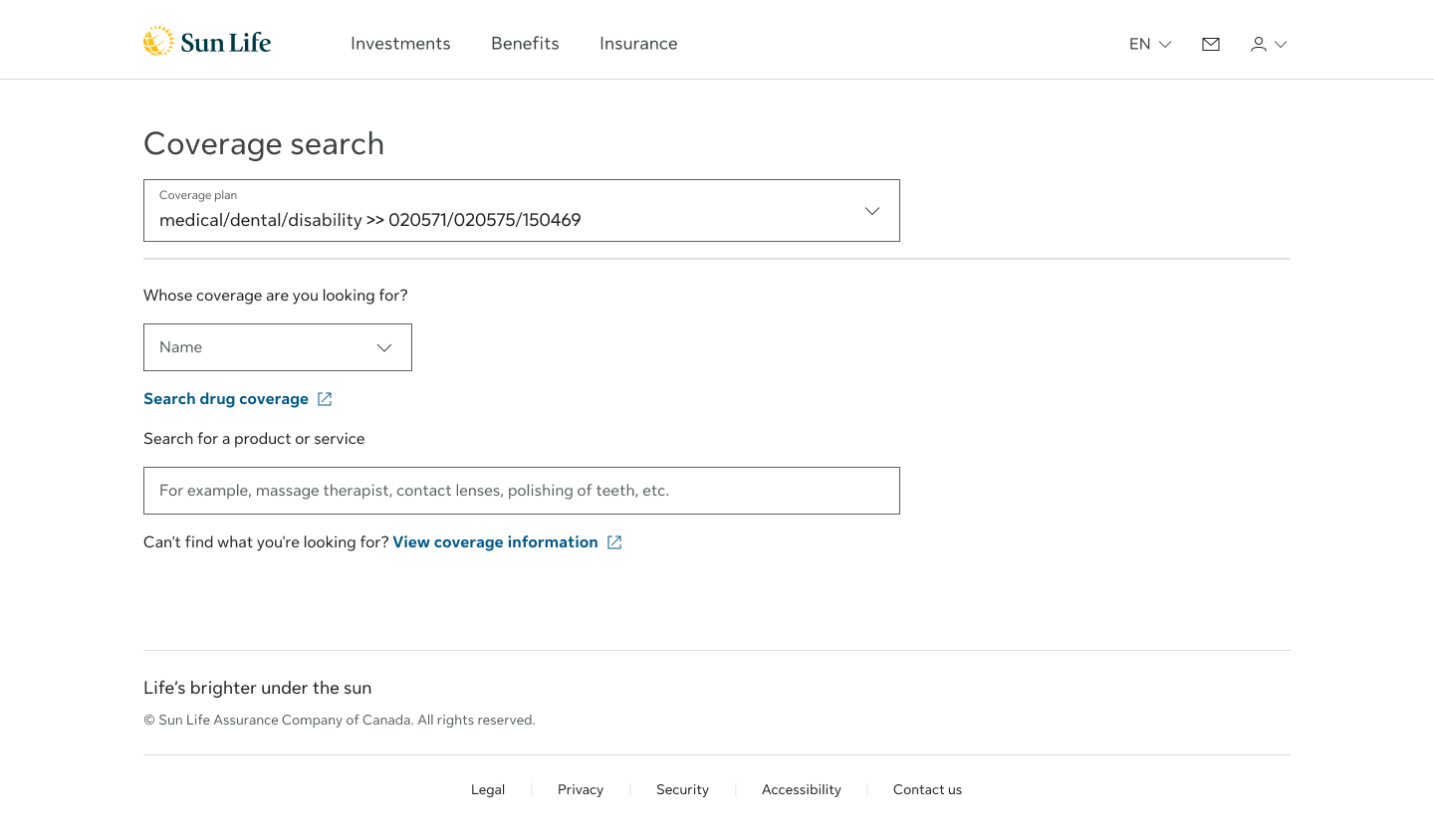
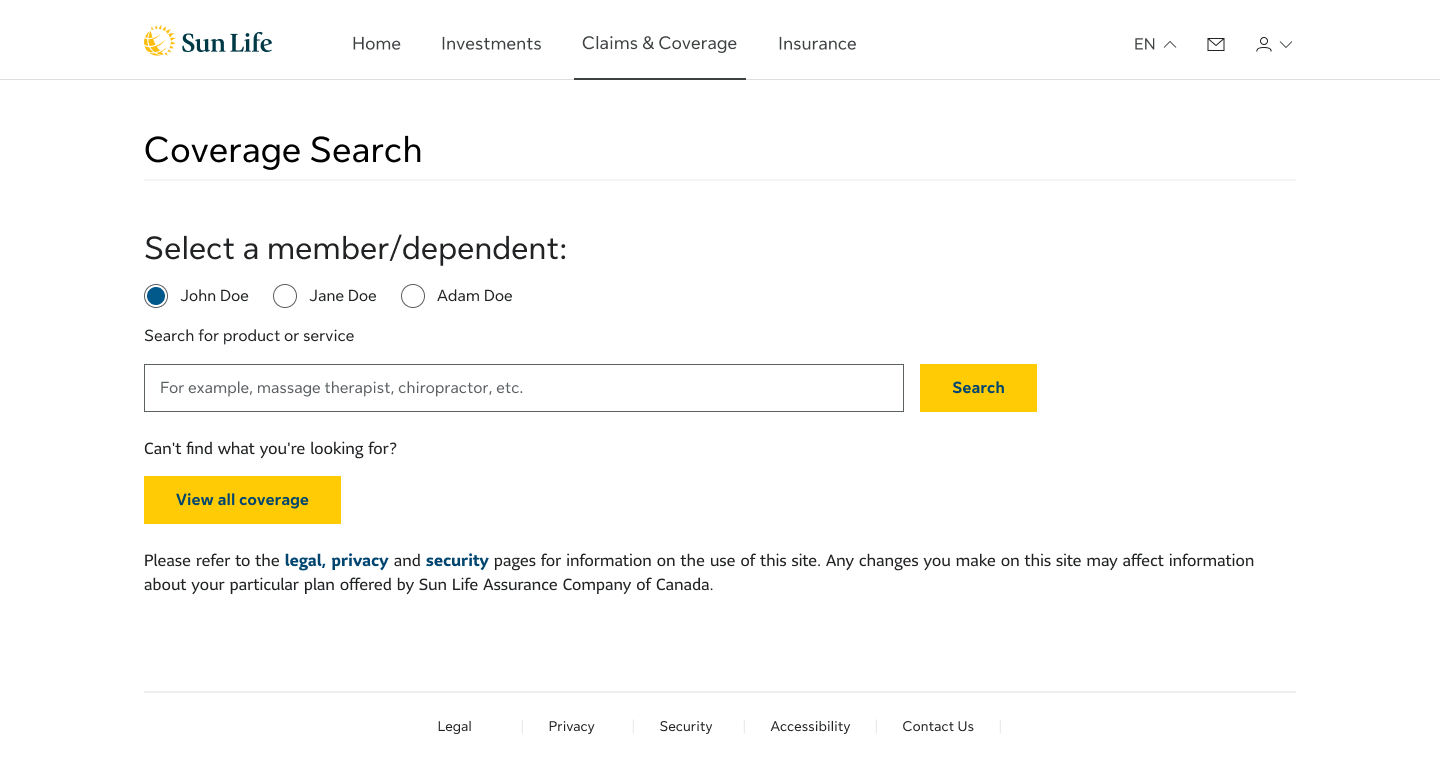
Screenshot of the new Coverage Search page
Unclear Flow, Poor Metrics
Before Coverage Search, users struggled to locate or understand their insurance coverage details. Confusing terminology, buried navigation, and inconsistent page structures led many to abandon the task and call the Client Care Centre (CCC) for assistance. The result:
• Over 40,000+ annual calls to the CCC
• 55% Customer Satisfaction Score (CSAT) for “Finding Coverage Info”
• Average Time on Task: 2 minutes, 5 seconds
Navigating Without Direction
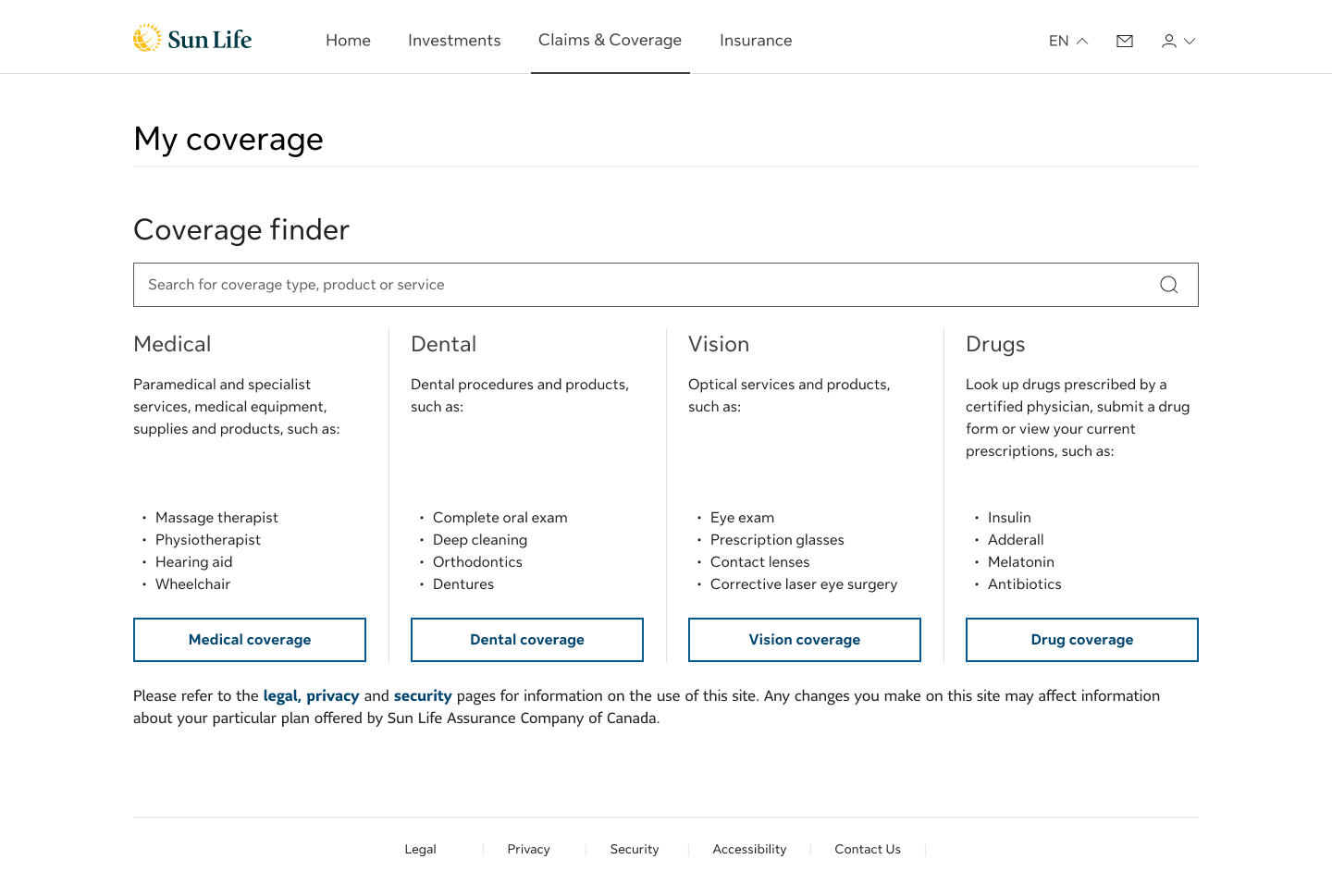
The path from the “my coverage” page to a specific detail page, like Massage Therapist, was confusing and inefficient. Users had to locate the medical coverage list, a long scroll of all eligible services.
With no search function and minimal visual hierarchy, users had to guess which category their need fell under, interpret vague terms like "Paramedical Services", and hope they chose the right coverage. Many weren’t confident they landed on the correct page or gave up entirely.
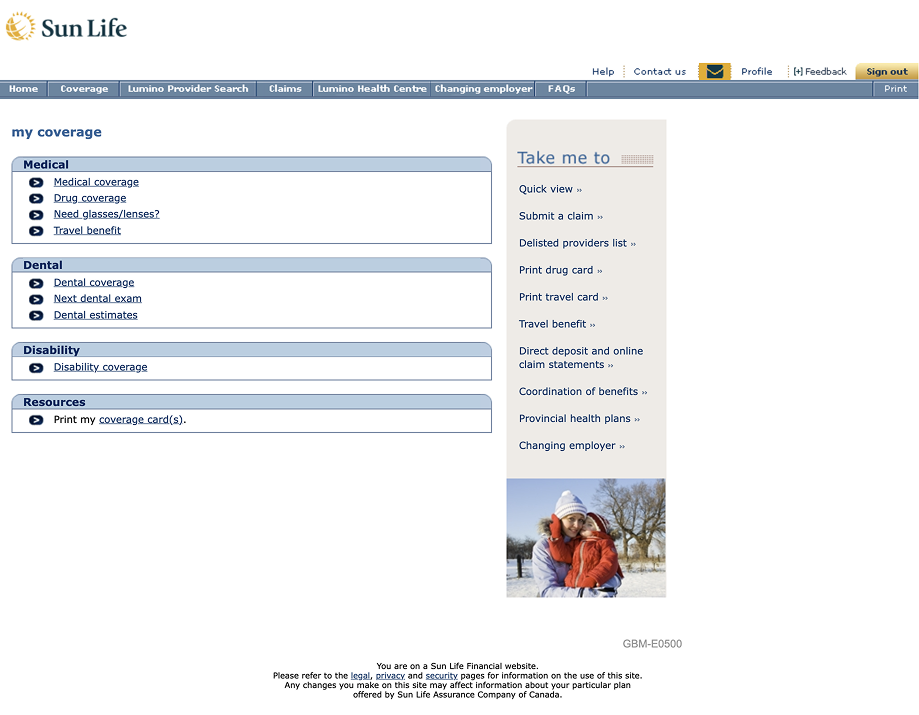
Current state "my coverage" page
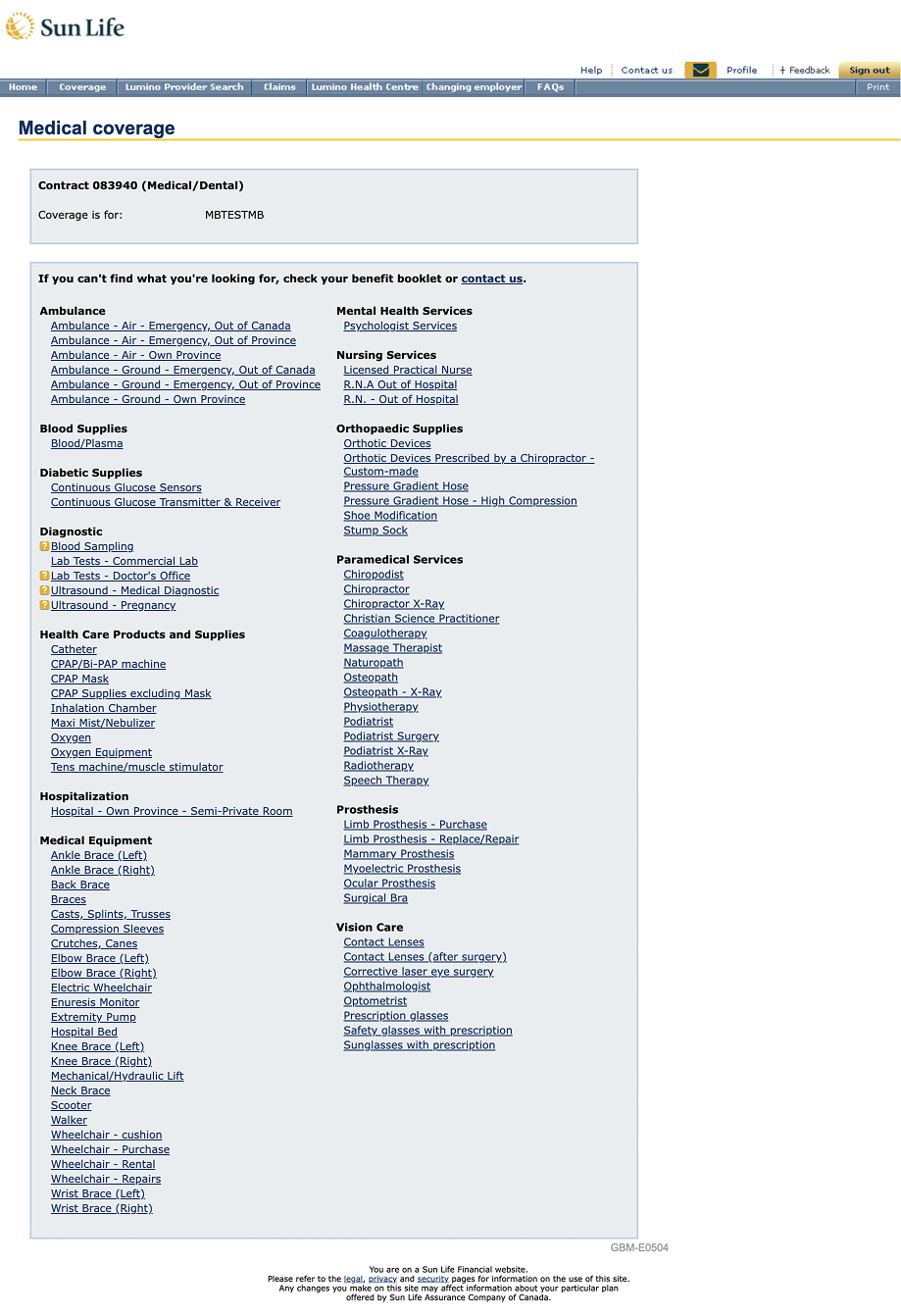
Current state medical coverage list
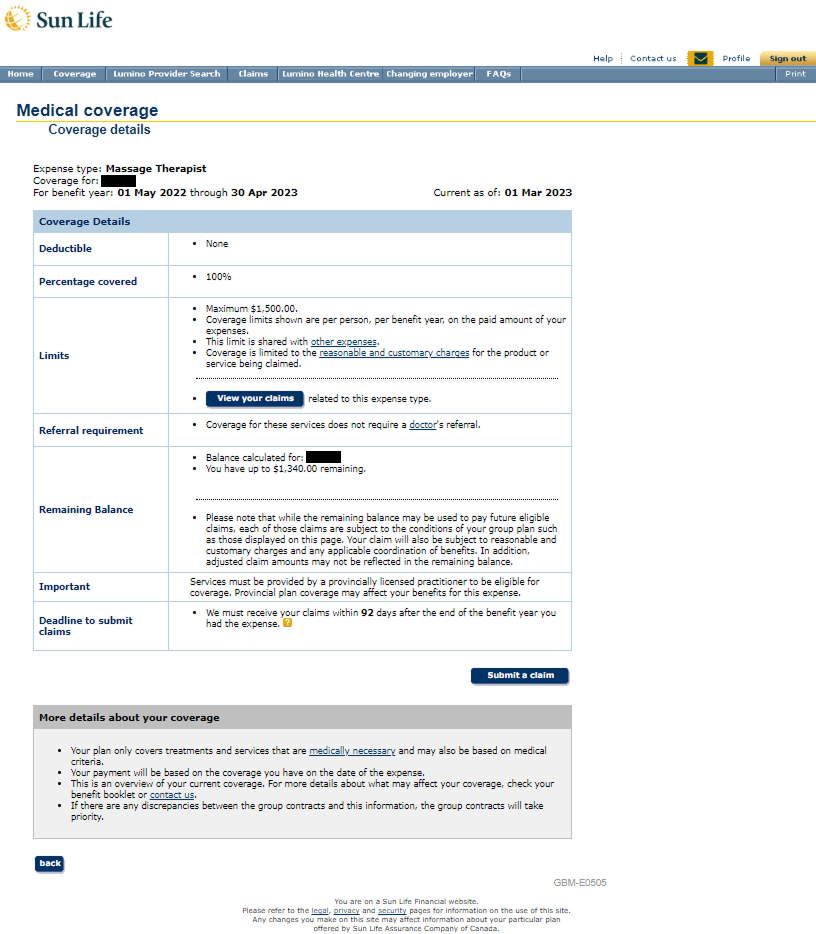
Massage Therapist detail page
The Workshop That Started It All
In 2023, I led a collaborative workshop to define strategy, create early prototypes, and plan user testing. By partnering with User Research, Development, and the CCC teams, we aligned on a shared goal: reduce friction and improve the self-serve experience. This work laid the foundation for Coverage Search.
Workshop ideation of a coverage finder page
First draft of Coverage Search component
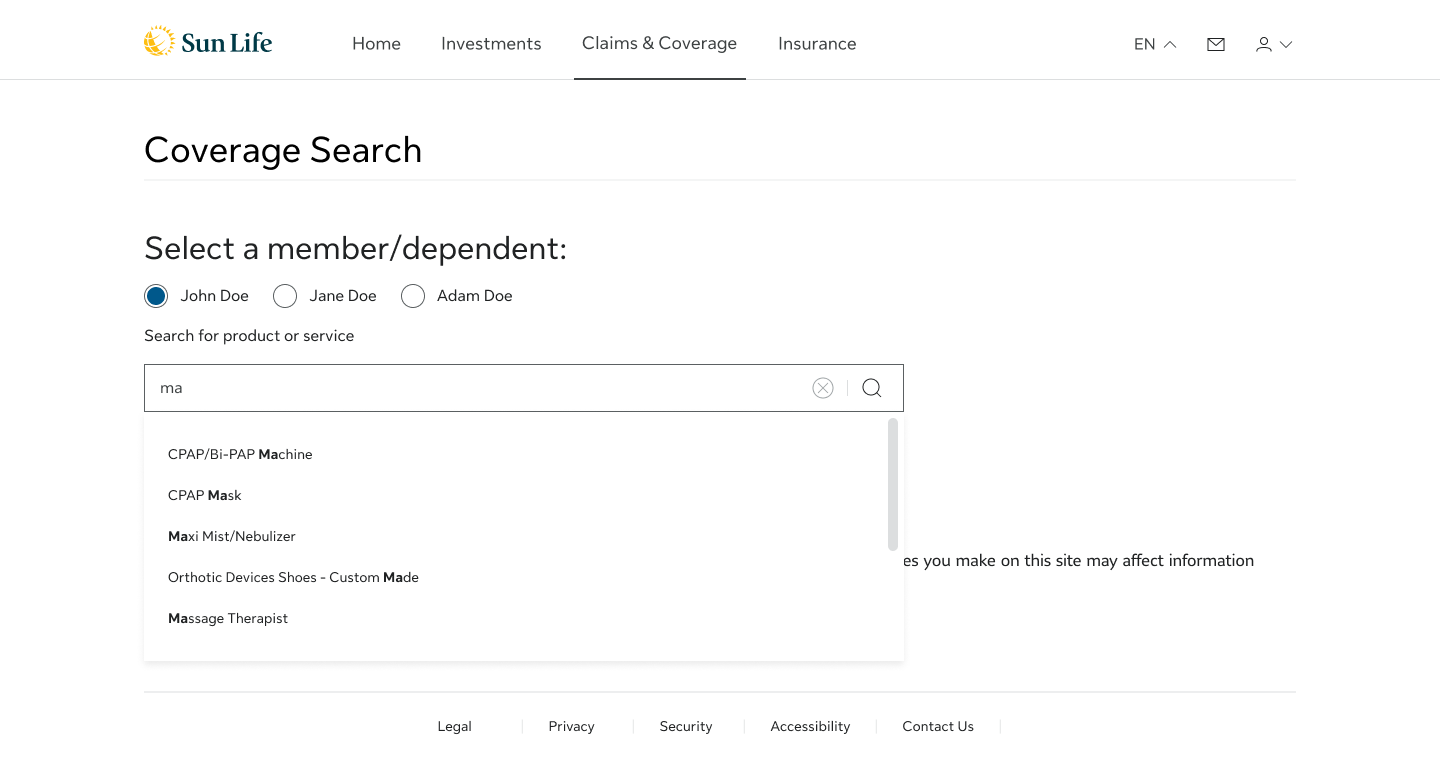
Iterating on search results behaviour - Version 1

Iterating on search results behaviour - Version 2
Search, Simplified
With support from CCC agents, we identified the most common call types and pain points related to finding coverage information. We mapped user journeys, audited confusing terminology, and uncovered key usability breakdowns in the existing experience.
I designed a predictive, typeahead search tool with autosuggest terms that cross-referenced the user’s input against their eligible coverages. The search results were adaptive, focused, and intentionally minimal—designed to reduce cognitive load and improve task success.
To validate the new design, I ran a comparative usability test using UserZoom with over 100 participants. The new Coverage Search experience outperformed the current state across every metric:
• Success Rate: 84% → 100%
• Ease of Use (Out of 7): 5.2 → 6.7
• Average Time on Task: 2:05 → 1:47
Launching Coverage Search
On February 2, 2025, we publicly launched Coverage Search. By the end of Q1, adoption was adoption was strong and the early impact was clear across key experience and business metrics:
• 264,000+ unique users
• Call rates dropped from 19.3% to 12%
• CSAT increased from 55% to 65%
• Lookup time decreased by 18 seconds
Users were also quoted as saying:
"It was incredibly easy to use, quick to find what I was looking for, and very user friendly."
"The search page was very simple and clutter free. This made the search bar very easy to find..."
“It was neatly laid out and not at all overwhelming by offering too many options.”
Refinements and Reflections
After launch, we monitored search logs and call data to guide improvements. One of the top failed searches was for “Travel Coverage,” making up approximately 27,000 users per month, which wasn’t included in the MVP. This became our first enhancement, scheduled for release in Q3 2025.
This project showcased the power of simplifying complex systems. By focusing on clarity, plain language, and evidence-based usability testing, we delivered a tool that helped users find what they needed faster while reducing volume for the Client Care Centre.
Coverage Search is a clear example of designing with both empathy and impact.